


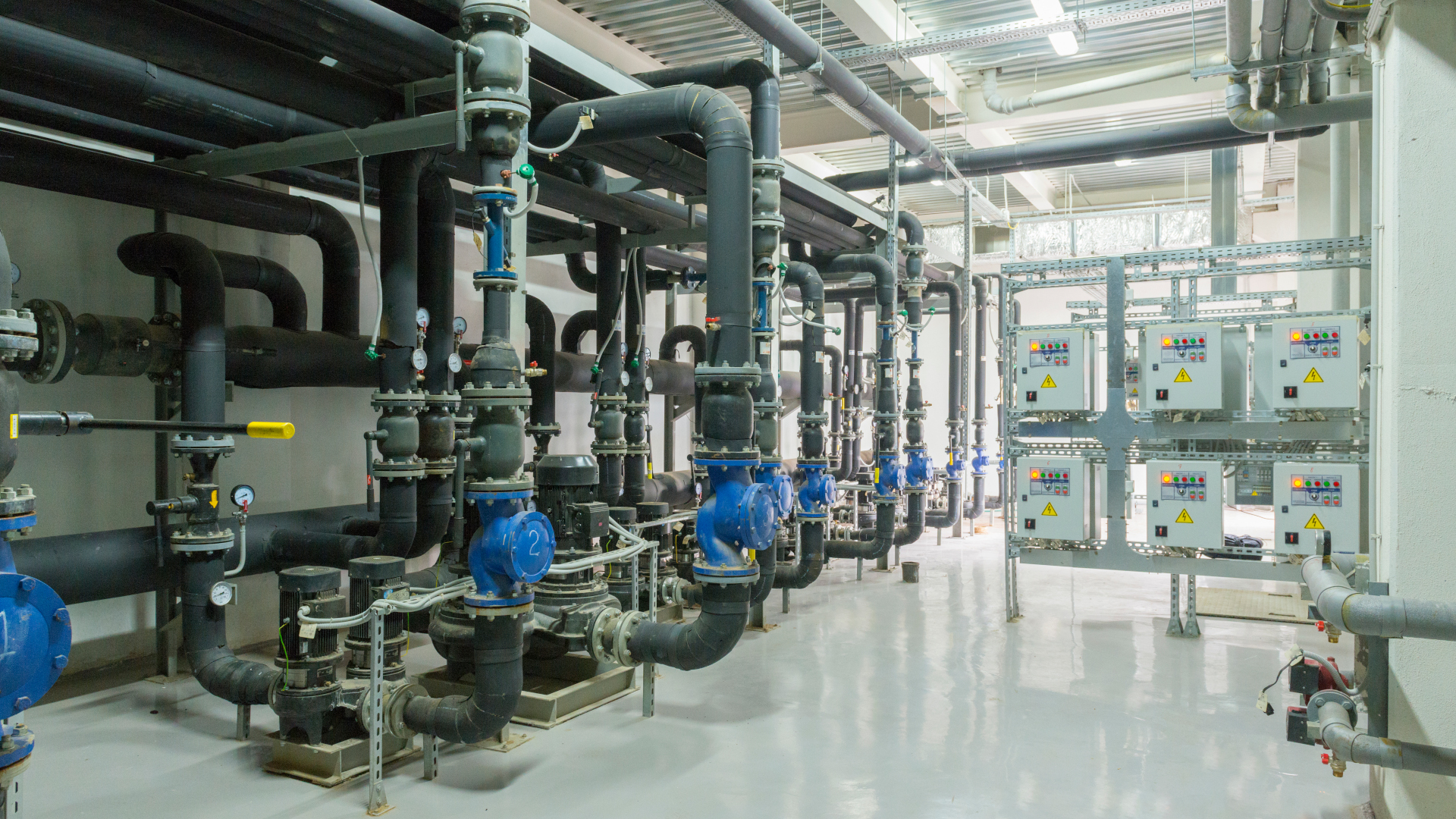

There’s an old joke among energy engineers: compressed air is the most expensive way to do almost anything. It’s funny because it’s true.
Compressed air is often called the “fourth utility” — alongside electricity, gas, and water in its importance to industrial operations. It powers pneumatic tools, actuates valves, operates packaging lines, cleans components, and controls processes across virtually every manufacturing sector. Walk into any factory and you’ll hear it: the constant background hum of compressors doing their thing.
The problem is that “their thing” is remarkably wasteful.
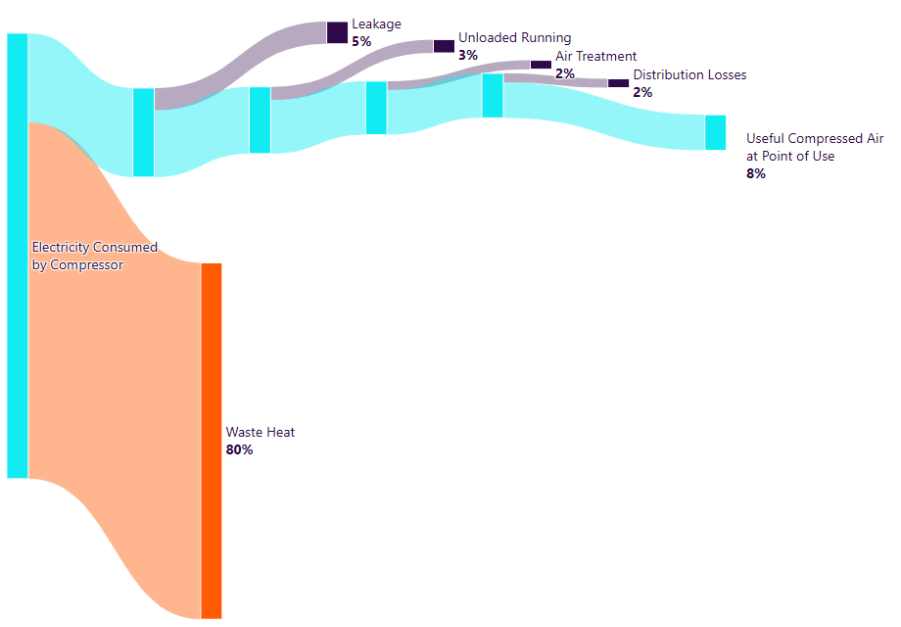
Only about 10% of the electrical energy fed into a typical compressor is converted into useful compressed air. The other ninety percent is lost as heat. For every pound you spend generating compressed air, roughly 90p produces nothing but warm air. There are cheaper ways to heat a workshop.
Across the UK, compressed air accounts for approximately 10% of all industrial electricity consumption — equivalent to the annual output of nearly 1.5 power stations, and responsible for over 5 million tonnes of CO₂ emissions, according to the Carbon Trust. A significant proportion of that energy is being squandered.
Why Compressed Air Leaks Are the Biggest Source of Wasted Energy
Of all the ways a compressed air system wastes energy, leaks are the biggest culprit. Most can’t be heard above the noise of a busy factory floor — so they just keep running, quietly draining money around the clock.
The numbers are consistently striking. A typical industrial plant without a recent leak survey will be losing 20–30% of its total compressed air output through leaks. In poorly maintained systems, that figure can exceed 40%.
According to the British Compressed Air Society, even a 3mm hole in a 7-bar system — roughly the width of a thick pencil lead — wastes over £1,000 a year in electricity. A 4mm hole jumps to over £11,000. Multiply that across an entire facility, and the cumulative cost becomes significant fast. Surveys routinely find dozens, sometimes hundreds, of individual leaks.
A few real examples show what that looks like in practice:
- A two-day leak survey at a Procter & Gamble washing powder plant identified over 100 leaks costing £250,000 a year in wasted energy.
- At a UK vehicle manufacturing plant, a leak detection programme found £102,000 in annual losses.
- A three-day survey at a food manufacturer pinpointed £49,000 worth of leaks.
- At a smaller engineering firm, data logging revealed the compressors were drawing 70 cfm over weekends — when the workshop was completely empty. The system was quietly wasting air and money every Saturday and Sunday, year after year.
One particularly striking case: a small manufacturer was about to invest in a second, larger compressor because the existing one couldn’t keep up with demand. A compressed air audit revealed that over 75% of their £100,000 annual compressed air bill was being wasted through leaks and poor practices. They didn’t need a bigger compressor. They needed to fix the holes in their pipes.
These aren’t outliers. They’re what happens when compressed air systems go unchecked — which, in practice, describes most of them.
Why Leaks Keep Getting Worse Over Time
Compressed air leaks are easy to ignore because they’re usually invisible, and in a noisy production environment, effectively inaudible. Even the loudest ones become background noise — familiar enough that nobody notices them anymore.
They develop gradually at threaded connections, quick-release couplings, worn hoses, corroded joints, faulty valves, and ageing seals. Older galvanised steel pipework is particularly prone to corrosion at the threads, causing joints to weep and worsen over time. Each individual leak might start as a barely perceptible whisper. But they accumulate relentlessly.
A system that was tight at commissioning will, without regular attention, steadily develop a leak rate that forces compressors to work harder and longer than they should.
That extra run-time doesn’t just cost electricity. It accelerates wear, brings forward maintenance intervals, and shortens equipment life. Leaks can also cause pressure drops that affect tool performance and product quality. And they create what the industry calls “artificial demand” — the compressor is working to feed the leaks, not the process, but nobody realises because the pressure gauge looks fine.
Other Ways Compressed Air Gets Wasted (Beyond Leaks)
Leaks are the headline act, but they’re not the only problem.
Using a compressed air line to blow dust off a workbench is a bit like using a pressure washer to rinse a teacup — it works, but you’re paying a premium for the privilege. Open-ended blow-off pipes used for cleaning parts, drying surfaces, or moving product consume enormous amounts of air compared to purpose-designed nozzles. Fitting a venturi-type nozzle to the same application can reduce air consumption by 30% or more. A dedicated low-pressure blower would often do the job for a fraction of the energy cost.
Then there are compressors that run around the clock, even when the plant is shut. An idling compressor still draws roughly 30–40% of its full-load power. That’s a lot of electricity for a machine producing air nobody is using. Timer controls and automated shut-off valves are a straightforward fix — but they only get installed once somebody actually looks at the data.
How Quickly Does a Compressed Air Audit Pay Back?
Leak detection and repair offers one of the fastest payback periods of any energy efficiency measure — typically weeks or months, not years.
One UK case study documented a three-month payback on a combined programme of leak repair, pressure reduction, and weekend shutdown controls, delivering £20,000 per year in ongoing savings. Another, working across a national bus company’s depot network, achieved payback within six months, with annual savings exceeding £100,000 and an 84-tonne reduction in CO₂.
The 80/20 rule applies here. Typically, fixing the largest 20% of identified leaks eliminates around 80% of the wasted air volume. A targeted repair programme focused on the worst offenders delivers substantial returns quickly — often before you’ve worked through the full repair list.
The catch is that leak repair isn’t a one-off job. New leaks develop constantly as vibration loosens fittings, seals degrade, and hoses wear. A system surveyed and repaired twelve months ago will have sprouted a fresh crop of leaks by now. The most effective approach is a regular programme — typically annual — of detection, prioritisation, and repair, with each cycle building on the gains of the last.
How Decerna Assesses Your Compressed Air System
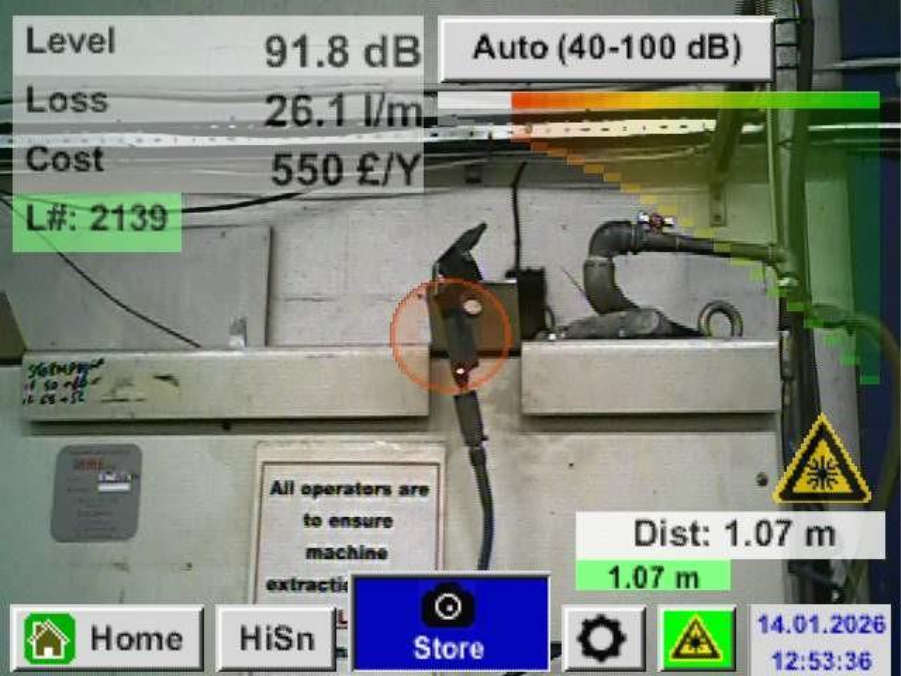
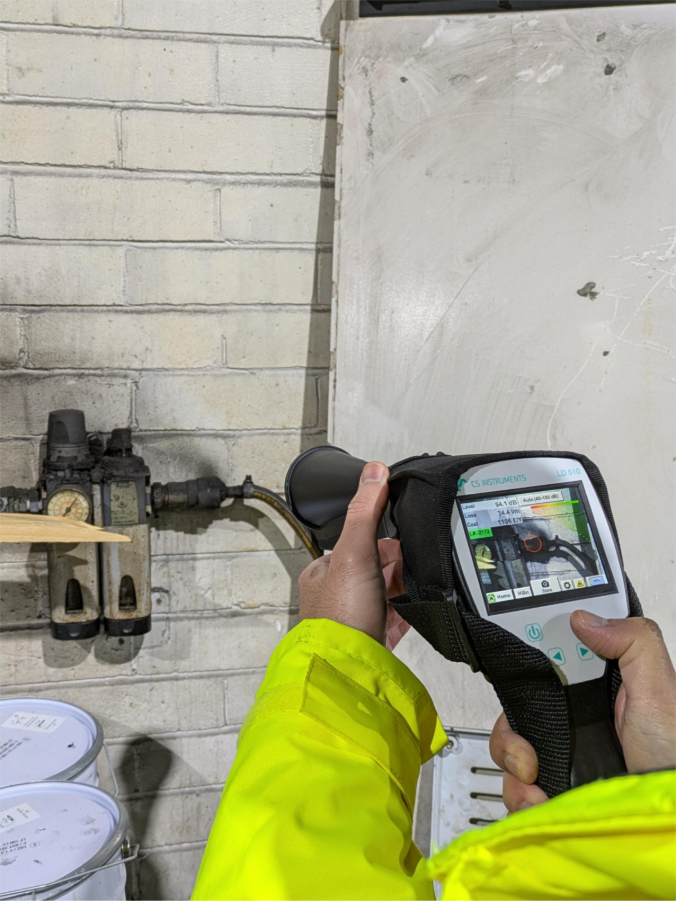
At Decerna, we carry out compressed air assessments using specialist ultrasonic leak detection, portable compressor data logging, and non-invasive clamp-on flow metering. Together, these tools let us find and cost every leak, profile compressor performance over time, and map exactly where air is being consumed across your site — all while your plant runs normally, with no downtime and no pipe modifications.
We’re not a compressor manufacturer or equipment supplier. We have no brand to push and nothing to sell beyond impartial, technically rigorous advice. Every site is different, and our recommendations reflect what the data actually shows — whether that’s fixing leaks, adjusting pressure settings, improving controls, or a combination of all three.
If your system hasn’t been surveyed in the last twelve months, it’s almost certainly costing more than it needs to. The investment is modest, the disruption is minimal, and as the evidence above consistently shows, the returns are rapid.
To find out what your site could save, message us at info@decerna.co.uk